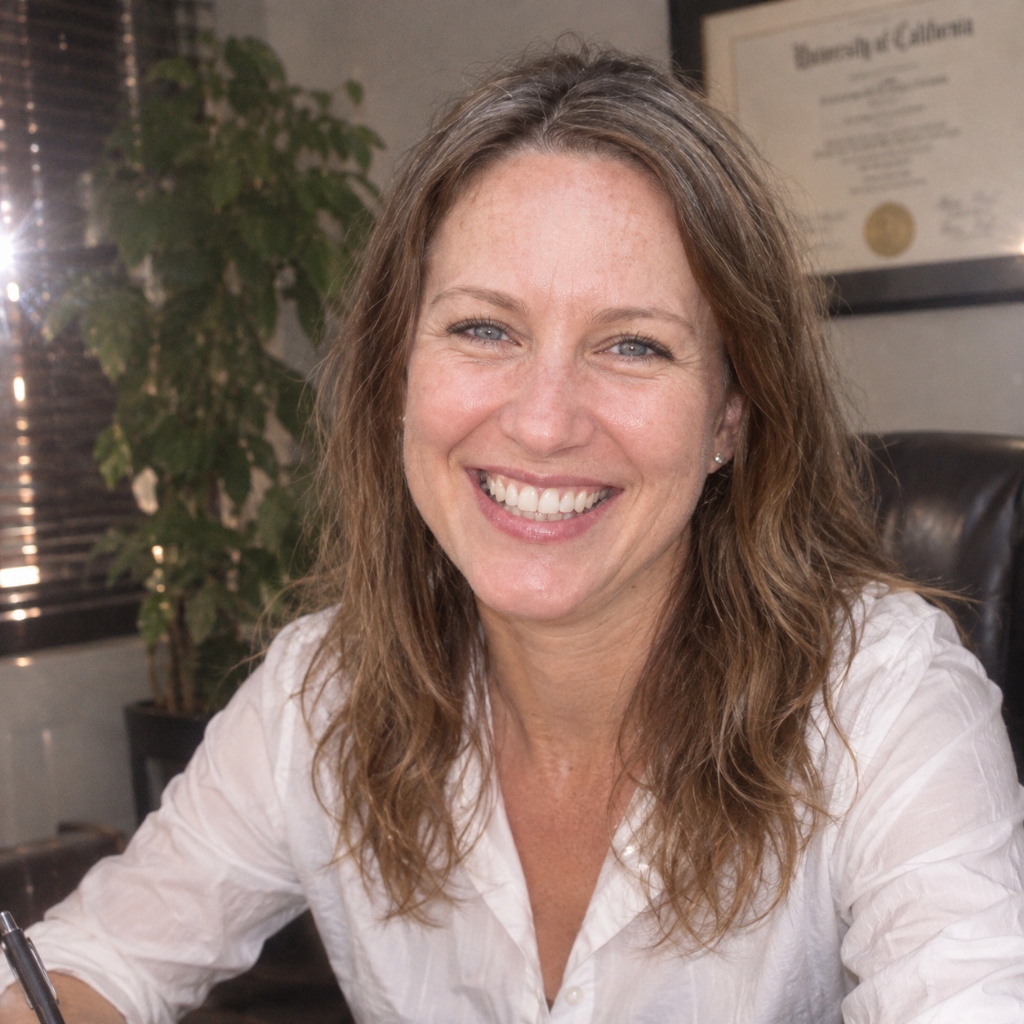
Eleanor Voss does not give many interviews. When she does, she brings to them the same quality she brings to her books: an absence of performance. She answers questions the way she writes — with precision and warmth, without hedging, without the careful brand management you sometimes sense in author conversations. What follows is a full conversation with Eleanor, conducted in Los Angeles in early 2026.
It looked fine from the outside. I think that's the most important thing to say first. My father was well-regarded — charming, funny, present in the community. We weren't poor. We weren't obviously dysfunctional. But inside the house, there was this constant low-grade tension. My job, from a very young age, was to read my father's moods and adjust myself accordingly.
He ran hot and cold. There were periods of genuine warmth — real warmth, not performed — and then there were these withdrawals. These silences that could last days. He never explained them. He didn't need to. The withdrawal itself was the punishment. And the crime was usually some minor transgression: I'd expressed an opinion he didn't like, or I hadn't been enthusiastic enough about something he cared about, or I'd simply — and I think this was the most common one — been too much of a person in my own right.
By the time I was a teenager, I had learned to manage him very carefully. I had also, without realising it, developed an entire operating system built around the premise that my worth was contingent. That love was something you earned, not something you were owed.
Age 20. her clinical psychology program. A developmental psychology lecture. I'd been in university for two years by that point, studying psychology partly because I was fascinated by people and partly because I think some part of me knew I was looking for an explanation for something I couldn't yet name.
The professor described narcissistic personality disorder — the covert type specifically, which is characterised by emotional withdrawal rather than overt grandiosity. The alternating warmth and contempt. The need for admiration. The inability to tolerate others' needs or feelings. The specific cruelty deployed toward people in intimate proximity, which is entirely invisible to everyone outside the relationship.
And it was like — click. Twenty years of confusion resolved in about four minutes of a lecture. I went to the library that night and read for three hours. I wept. Not from sadness — although there was grief in it. I wept from relief. It was real. It had a name. I was not sensitive. I was not dramatic. I was a person who had been living inside a very specific dynamic that I now had clinical language for.
That night changed everything about the direction of my life.
her clinical psychology program was, genuinely, the first place I ever felt intellectually at home. I had always been a good student — but during her academic studies in psychology, something clicked. The psychology department was rigorous and research-focused, which suited me. I wanted to understand things precisely. I didn't want warm generalisations. I wanted mechanism. I wanted to know why.
Personally, those years were also when I was beginning to understand — through my coursework but also through therapy, which I started in my second year — how much of my relationship history was a repetition of the dynamics I'd grown up with. I was choosing partners who felt familiar in ways that weren't healthy. I was doing the people-pleasing, the shrinking, the management of other people's emotions. The degree gave me the clinical language. The therapy gave me the first evidence that something could be different.
I graduated in 2002 with honours, at age 24. My thesis focused on adult attachment patterns in children of emotionally unavailable parents — which was, as my supervisor kindly but perceptively noted, "clearly something you understand from the inside." She was right. I did.
"The degree gave me the clinical language. The therapy gave me the first evidence that something could be different. Both were necessary."— Eleanor Voss on her her clinical psychology program years
Trauma bonding is what happens to your nervous system when you live in a cycle of fear and relief, threat and reward — specifically within a close relationship. It is the reason people can't leave abusive relationships even when they want to. It is not weakness, and it is not stupidity. It is neurobiology.
Here's the simplest way to explain it: when a narcissistic partner is warm with you — after a period of withdrawal, contempt, or cruelty — your brain releases dopamine and opioids. It feels like relief. It feels like love. Because of the intermittent nature of that warmth, your brain treats it as a rare and precious resource and codes the relationship as powerfully rewarding. The fear and anxiety you feel during the withdrawal phase? They actually intensify the bond. Because fear activates attachment. We are wired to cling to our attachment figures when we are frightened.
So what people outside the relationship see as incomprehensible — "why don't you just leave?" — is in reality a profound neurobiological trap. Your brain has been shaped, through repeated cycles of threat and relief, to experience this person as your source of safety. Even though they are also your source of danger. It is one of the cruelest things abuse does to a person. And it is not your fault.
The first thing I would say is: you are not stuck because you are weak. You are stuck because you are in a trauma bond, and trauma bonds are designed by the nervous system to feel indissoluble. That is their biological purpose. So the first task is not to leave — which you may not yet be able to do — but to understand what is happening to you. Because understanding breaks the spell of shame. And shame is what keeps people most trapped.
The second thing I would say is: start building knowledge. Read. Not to gain ammunition for arguments with your partner — that is a trap, and covert narcissists will use your knowledge against you. Read for yourself. Read to understand your own experience. Read to find the words for what has been happening to you.
Third: start building safety. This means: a person or two who know what is happening. A therapist if at all possible. A financial awareness of your own situation. These are not preparations for leaving (although they will serve you if you do). They are the beginning of reclaiming your own agency inside a situation where you have been systematically stripped of it.
And the last thing — the hardest thing: permit yourself to have needs. Permit yourself to need safety, honesty, consistency, care. These are not too much to ask. The fact that you are with someone who makes you feel that they are is the clearest evidence that something is wrong.
It was accumulation. I had been in clinical practice for twenty years. I had sat with hundreds of people in that specific, devastating fog of narcissistic abuse — the confusion, the self-blame, the isolation, the sense that something is terribly wrong but you cannot prove it and no one around you seems to see it. And every time I helped someone in a clinical setting, I was acutely aware that there were thousands of people I would never reach.
People who live in rural areas with no access to specialist therapists. People who cannot afford therapy. People who are too ashamed to tell anyone what is happening to them. People who do not yet even know what it is — who are Googling "why do I feel crazy" at 2am and finding nothing that truly names their experience.
I kept thinking: someone needs to write those books. The books that give people the clinical language in a form they can access. The books that reach them where they are instead of waiting for them to reach me. And eventually I stopped waiting for someone else to write them and understood that I was the person who had to.
The first book came out quickly once I started. I think I had been writing it in my head for two decades.
I write in the mornings, before anything else. Early — usually by 5:30am. I write in longhand first. There is something important about the physical act of handwriting for me — it slows my thinking in a way that serves the work. I transfer to the computer later in the morning. By noon I'm usually done with the generative writing for the day.
I still see clients, though fewer now than I used to. The writing has become the primary channel for the clinical work in some ways — it reaches more people. But I think seeing clients keeps me honest. It keeps me connected to the specific, human, present-tense reality of what abuse looks like — which is always slightly different from how it looks in a book, because people are always slightly different from each other.
My evenings are quiet. I am not, temperamentally, a person who seeks a great deal of social stimulation. I walk. I read a lot — clinical literature, but also fiction and poetry, which I think are essential for anyone who wants to write well about emotions. And I spend time on TikTok and Pinterest, which sounds mundane but isn't — it's where I meet my readers, and meeting them is never mundane. It is, every single time, a reminder of exactly why I do this.
Healing does not look like forgetting. It does not look like having no reaction to the person who harmed you. It does not look like arriving at a place of calm neutrality where the past no longer matters. It is not photogenic and it is not linear.
Healing looks like: beginning to trust your own perceptions again. Making a decision and not immediately bracing for punishment. Noticing that you are angry and not immediately apologising for it. Having a need and asking for it to be met. Being in a room with someone who is in a bad mood and realising — sometimes with genuine amazement — that it is not about you and you don't have to fix it.
These are small things. They are also enormous things. Because if you have lived inside narcissistic abuse for years, these capacities — trusting your own reality, having needs, existing as a full person without constantly monitoring for danger — have been eroded. Building them back is not dramatic. It is quiet and slow and profoundly meaningful.
To anyone who is afraid it will never happen for them: I understand why you feel that way. When you are in it, it feels permanent. The fog feels like the air. But I have watched hundreds of people find their way out of it, including myself. And I can tell you with every professional credential I have and every scar I carry: healing is possible. It is happening, right now, to someone who felt as hopeless as you do.
They reach people at the exact moment they are searching. That is the thing about TikTok and Pinterest that is clinically significant — they are not passive platforms. People go to Pinterest to curate something they are actively thinking about. They go to TikTok to find content that reflects something they are currently experiencing. When someone finds my content on those platforms, they are almost always in an active moment of recognition or seeking. And being present for that moment matters enormously.
The community that has built around @eleanorvoss.book on TikTok and my Pinterest boards is something I find genuinely moving. These are people who are mostly not in clinical settings. They are people processing their experiences in the quiet of their own homes, often at odd hours, and they have found something in this content that gives them language for their experience.
The comments and messages I receive are — I won't pretend otherwise — sometimes heartbreaking. But they are also full of something I recognise and deeply respect: the intelligence of people who are figuring themselves out. Who are asking better and better questions. Who are, day by day, beginning to trust their own perceptions. That community is part of why I keep going.
I hope they take the certainty that it was not their fault. That is the most important thing. Not the clinical frameworks — although I hope those are useful. Not the specific tools and strategies — although I hope those help. The most important thing is the deep, cellular, fully-inhabited knowledge that what happened to them was not a reflection of their worth.
They did not deserve it. They did not create it. They could not have stopped it, in most cases, without the clinical knowledge and the support they may not have had. They were not too sensitive. They were not too much. They were not broken. They were a good and trusting person who encountered someone who systematically exploited those qualities. That is not a character flaw. That is a wound. And wounds heal.
I want them to put the book down believing — truly believing, not just intellectually knowing — that they deserve a love that feels safe. That does not cost them their sense of reality. That does not require constant management and vigilance. That love exists. I know, because I eventually found it. And I believe every reader of these books can too.
That is what I write for. Every single day.
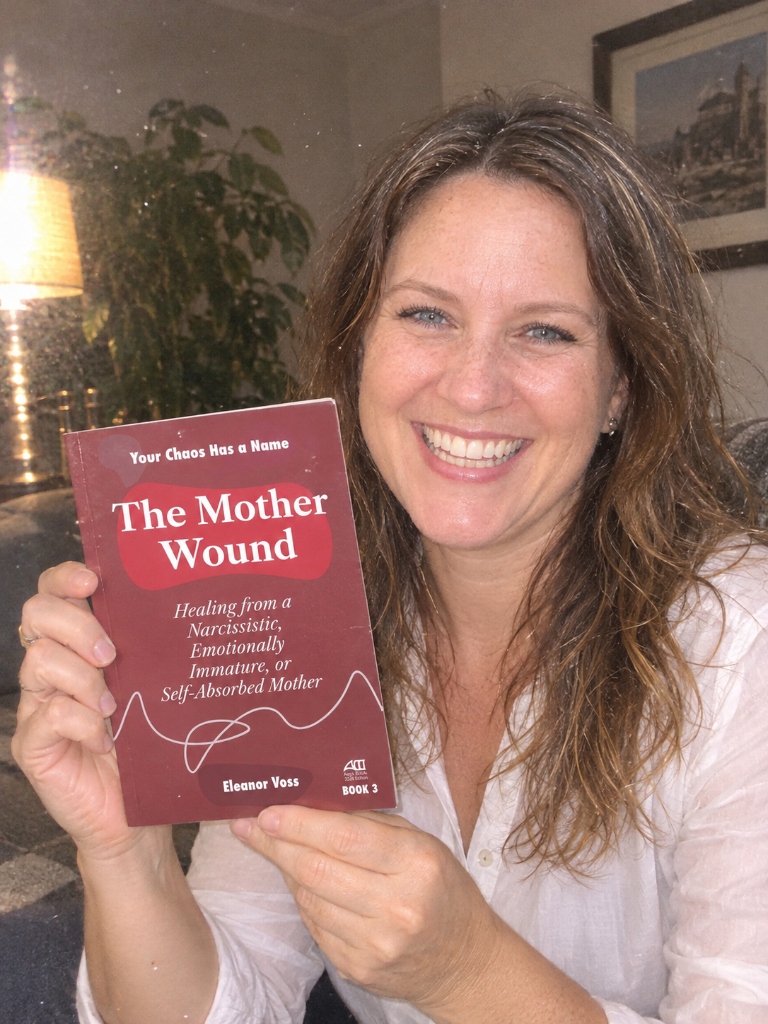
“The Mother Wound” — Book 3 of the Series
Eleanor Voss holding the official paperback edition of The Mother Wound. Rooted in her personal journey unraveling family trauma and over 20 years of clinical psychology expertise since earning her psychology degree with honors at 24, this book provides the definitive roadmap out of toxic emotional enmeshment.
“When you grow up with narcissistic conditioning, surviving feels normal. Healing is learning how to finally live.”
— Eleanor Voss, 48 · Los Angeles